

Products Description
The GIGAC 1×9 3.125G Simplex/Duplex Optical Transceiver Module is a high-reliability industrial fiber module in a compact 1×9 pin-package format, designed for demanding Fibre Channel, industrial Ethernet, and fiber optic link applications. It uses CML (Current Mode Logic) signal input/output for excellent EMI suppression and supports data rates of both 2.125Gbps and 3.125Gbps depending on the selected model.
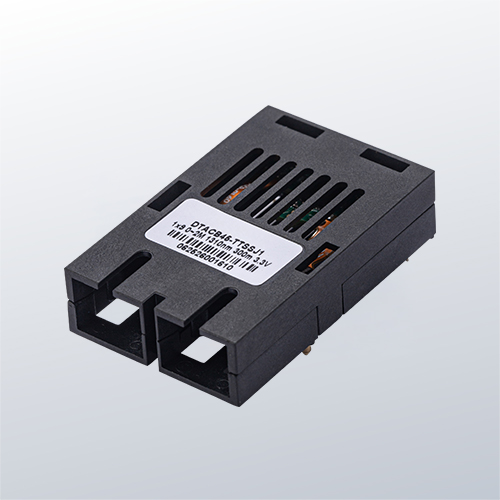
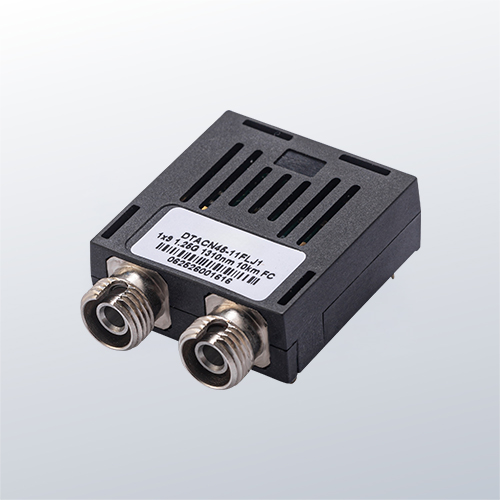
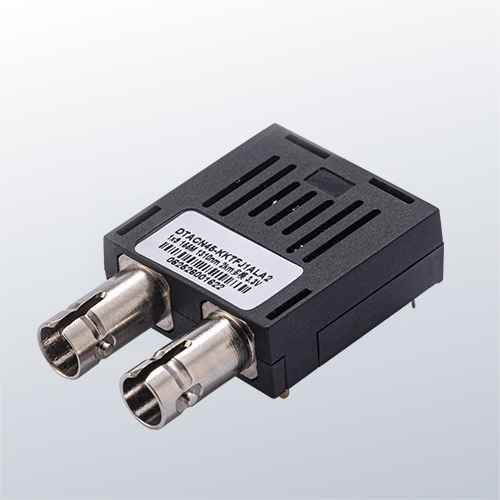
The module offers simplex and duplex configurations with ST/FC/SC interface options, covering wavelengths from 850nm to 1550nm and CWDM BiDi pairs. Multimode variants provide short-reach links up to 2km, while single-mode versions extend to 80km — serving a wide range of industrial, telecom, and defense fiber deployments. Receiver sensitivity of –21dBm and differential output swing of 360–2000mVpp ensure stable optical link performance across the rated distance and temperature range.
Two military-grade temperature options are available: Military Industrial Grade J (–40°C to +85°C) and Military Extended Industrial Grade M (–55°C to +85°C). The module complies with IEC 60825 Class 1 laser safety and RoHS 2.0, and is made in China with localized production technology.
J/M | Grade J: Military Industrial — –40°C to +85°C | Grade M: Military Extended Industrial — –55°C to +85°C. Both grades available across all distance and wavelength variants. |
Technical Specs Summary
Parameter | Specification |
Data Rate | 2.125Gbps or 3.125Gbps (model depe ndent) |
Package | 1×9 Pin Package (simplex and duplex options) |
Interface | ST / FC / SC (pluggable) |
Wavelength | 850nm / 1300nm / 1310nm / 1550nm / CWDM BiDi |
Fiber Type | Multimode (MMF) or Single-Mode (SMF) |
Transmission Distance | 500m (MMF) | 2km (MMF) | 10–80km (SMF) |
Power Supply | Single +3.3V |
Logic Interface | CML (Current Mode Logic) |
Receiver Sensitivity | –21 dBm |
Differential Output Swing | 360 to 2000 mVpp |
Max Power Consumption | ≤ 1.2W |
Temp. — Grade J (Military Industrial) | –40°C to +85°C |
Temp. — Grade M (Military Extended) | –55°C to +85°C |
Certifications | IEC 60825 Class 1 Laser Safety | RoHS 2.0 |
Key Features
1×9 pin package — simplex and duplex configurations available
Data rates: 2.125Gbps and 3.125Gbps
ST / FC / SC pluggable optical interfaces
Wavelengths: 850nm, 1300nm, 1310nm, 1550nm, CWDM Multimode fiber: 500m (850nm) and 2km (1300nm)
Single-mode fiber: 10km, 20km, 40km, 60km, 80km
CML logic signal input/output for superior EMI suppression
Single +3.3V power supply
Receiver sensitivity: –21 dBm
Differential output swing: 360 to 2000 mVpp
Maximum power consumption: ≤ 1.2W
Military Industrial Grade (J): –40°C to +85°C
Military Extended Industrial Grade (M): –55°C to +85°C
IEC 60825 Class 1 laser safety certified
RoHS 2.0 compliant
Technical Advantages
CML Logic — Superior EMI Performance
CML (Current Mode Logic) signal interfaces provide significantly lower electromagnetic interference compared to TTL/LVTTL logic, making this module well suited for EMI-sensitive environments such as industrial switchgear rooms, defense electronics enclosures, and dense fiber aggregation equipment. CML also eliminates the need for single-ended to differential conversion circuitry on the host board.
Dual Military Temperature Grades
The module is offered in two military-qualified temperature grades: Grade J (–40°C to +85°C) for standard harsh-environment military and industrial deployments, and Grade M (–55°C to +85°C) for extreme cold-climate applications including arctic field installations, high-altitude defense systems, and satellite ground stations.
Simplex and Duplex Configurations
Both simplex (single fiber) and duplex (dual fiber) versions are available in the same 1×9 form factor. Simplex BiDi variants use different TX/RX wavelength pairs (e.g., Tx1310nm/Rx1550nm) to achieve full-duplex communication over a single fiber strand, halving fiber infrastructure requirements for long-distance industrial links.
80km Single-Mode Reach
The 80km single-mode variants support long-distance fiber links for metro network segments, border monitoring systems, distributed energy infrastructure, and inter-site military communications — all without optical amplification and within a ≤1.2W power budget.
Broad Interface Compatibility: ST / FC / SC
Three pluggable interface options — ST, FC, and SC — allow the module to integrate directly with existing fiber plant connector types across military, industrial, and telecom environments without requiring adapter sleeves or interface conversion hardware.
! | Note: Simplex BiDi models must be deployed in complementary wavelength pairs — Tx1310nm/Rx1550nm at one end paired with Tx1550nm/Rx1310nm at the other. Verify the wavelength configuration and temperature grade (J or M) before ordering. For the CWDM BiDi 80km model (U1ABN09), the wavelengths are ±1552nm and ±1490nm. |
Typical Applications
Fibre Channel (FC) over Ethernet and direct FC storage area networks (SAN)
Industrial Ethernet fiber backbone at 2.125G and 3.125Gbps
Military communications and defense electronics fiber links
Long-distance single-mode fiber links up to 80km
Metro network aggregation and access fiber infrastructure
Border surveillance, radar, and distributed defense system fiber networks
Satellite ground station and high-altitude communication links
Industrial automation and process control fiber networks
Compatibility and Deployment
The 1×9 pin-package module mounts directly on the host PCB via through-hole pins, fitting standard 1×9 receptacle footprints used in Fibre Channel host bus adapters (HBA), industrial fiber converters, and OEM communication boards. ST/FC/SC pluggable interfaces accept standard fiber patch cords without adapters.
For simplex BiDi deployment: confirm that the TX wavelength at one link end matches the RX wavelength at the far end. Part number suffix codes identify the interface type (S=SC, F=FC, T=ST) and temperature grade (J or M). Contact our technical team for OEM volume support, custom wavelength configurations, or IEC 60825 compliance documentation.
FAQ Module
Q: What is a 1×9 optical transceiver module?
A: A 1×9 optical transceiver is a fiber optic module in a 9-pin through-hole package that mounts directly on a host PCB. It is widely used in Fibre Channel HBAs, industrial fiber converters, military communication boards, and OEM fiber equipment where SFP cages are not appropriate.
Q: What data rates does this module support?
A: The module supports 2.125Gbps (used in 2G Fibre Channel) and 3.125Gbps (used in 3G Fibre Channel and high-speed industrial fiber links) depending on the selected model variant.
Q: What is the maximum transmission distance?
A: Up to 80km over single-mode fiber for select 3.125Gbps models. Other distance options include 500m (multimode, 850nm), 2km (multimode, 1300nm), and 10km, 20km, 40km, 60km over single-mode fiber. Select based on your link distance and fiber type.
Q: What are the two temperature grades?
A: Military Industrial Grade J operates from –40°C to +85°C, suitable for standard harsh-environment military and industrial applications. Military Extended Industrial Grade M operates from –55°C to +85°C, designed for extreme cold-climate deployments such as arctic installations, high-altitude defense systems, and satellite ground stations.
Q: What is CML logic and why is it used?
A: CML (Current Mode Logic) is a high-speed differential signaling standard that provides lower electromagnetic interference (EMI) and faster switching compared to TTL/LVTTL logic. It is preferred in Fibre Channel, military electronics, and EMI-sensitive industrial environments where signal integrity at 2–3Gbps+ must be maintained.
Q: How do simplex BiDi models differ from duplex models?
A: Duplex models use two separate fibers — one for TX, one for RX. Simplex BiDi models transmit and receive on a single fiber using two different wavelengths (e.g., Tx1310nm/Rx1550nm), halving fiber count per link. Simplex BiDi models must be deployed in matched complementary wavelength pairs at each end of the fiber link.
Ordering Information
Part number suffix codes: (1) = Temperature grade and interface type. 'J' or 'M' for temperature; 'S'=SC, 'F'=FC, 'T'=ST for interface. See notes below.
Part Number | Data Rate | Wavelength | Distance | Fiber | Interface | Temp. |
DTACN44 – 22*(1) | 2.125Gbps | 850nm | 500m | MMF | ST/FC/SC | J/M |
DTACN45 – 33*(1) | 3.125Gbps | 1300nm | 2km | MMF | ST/FC/SC | J/M |
DTACM45 – 33*(1) | 3.125Gbps | 1310nm | 10km | SMF | ST/FC/SC | J/M |
DTACM45 – 22*(1) | 2.125Gbps | 1310nm | 20km | SMF | ST/FC/SC | J/M |
EFACM45 – 22*(1) | 2.125Gbps | 1310nm | 40km | SMF | ST/FC/SC | J/M |
B1ACN46 – 33*(1) | 3.125Gbps | 1550nm | 40km | SMF | ST/FC/SC | J/M |
DTACN46 – 33*(1) | 3.125Gbps | 1550nm | 60km | SMF | ST/FC/SC | J/M |
DTABN40 – 33*(1) | 3.125Gbps | Tx1310/Rx1550nm | 10km | SMF | ST/FC/SC | J/M |
DTABN22 – 22*(1) | 2.125Gbps | Tx1550/Rx1310nm | 10km | SMF | ST/FC/SC | J/M |
DTABN41 – 33*(1) | 3.125Gbps | Tx1310/Rx1550nm | 20km | SMF | ST/FC/SC | J/M |
DTABN42 – 33*(1) | 3.125Gbps | Tx1550/Rx1310nm | 20km | SMF | ST/FC/SC | J/M |
DTABN43 – 33*(1) | 3.125Gbps | Tx1310/Rx1550nm | 40km | SMF | ST/FC/SC | J/M |
DTABN44 – 33*(1) | 3.125Gbps | Tx1550/Rx1310nm | 40km | SMF | ST/FC/SC | J/M |
DTABN09 – 33*(1) | 3.125Gbps | Tx1310/Rx1550nm | 80km | SMF | ST/FC/SC | J/M |
DTABN22 – 33*(1) | 3.125Gbps | Tx1550/Rx1310nm | 80km | SMF | ST/FC/SC | J/M |
U1ABN09 – 33*(1) | 3.125Gbps | ±1552/±1490nm | 80km | SMF | ST/FC/SC | J/M |
Note 1: "x" indicates the module's operating temperature: "J" = –40°C to +85°C (Military Industrial); "M" = –55°C to +85°C (Military Extended Industrial).
Note 2: "x" = S indicates SC pluggable optical port; "x" = F indicates FC pluggable optical port; "x" = T indicates ST pluggable optical port.
Our factory

Industrial Optical Module Assembly Line

High-Precision Fiber Assembly

Automated Manufacturing for Consistency

100% Functional & Reliability Testing