

Products Description
Technical Specs Summary
Parameter | Specification |
Transmitter Technology | EML (Electro-absorption Modulated Laser) |
Thermal Control | Integrated TEC (Thermo-Electric Cooler) |
Control Circuit | Internal microcontroller — automatic bias / APC / temperature control |
Receiver | Optical receiving module + limiting amplifier (LA) |
Data Rates | 2.5Gbps (STM-16) | 10Gbps (STM-64) | 40Gbps | 100Gbps |
Wavelength Grid | CWDM | DWDM (50GHz / 100GHz ITU-T C-band) |
Fiber Type | Single-mode fiber (SMF) |
Configuration | Single-fiber (simplex) or Dual-fiber (duplex) |
Transmission Distance | 40km / 80km / 400km / 600km (rate and model dependent) |
Output Type | Flexible digital output | ROADM-compatible variants |
DDM | Yes — digital diagnostic monitoring |
Temp — Commercial | –10°C / +40°C (certain models) |
Temp — Industrial | –40°C to +85°C |
Standards | SDH/SONET | 100GbE | 40GbE | DWDM | Coherent networks |
Detailed Product Description
Product Overview
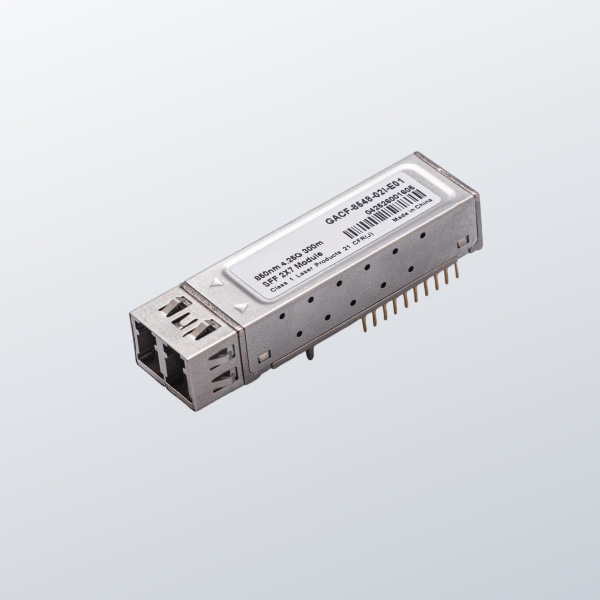
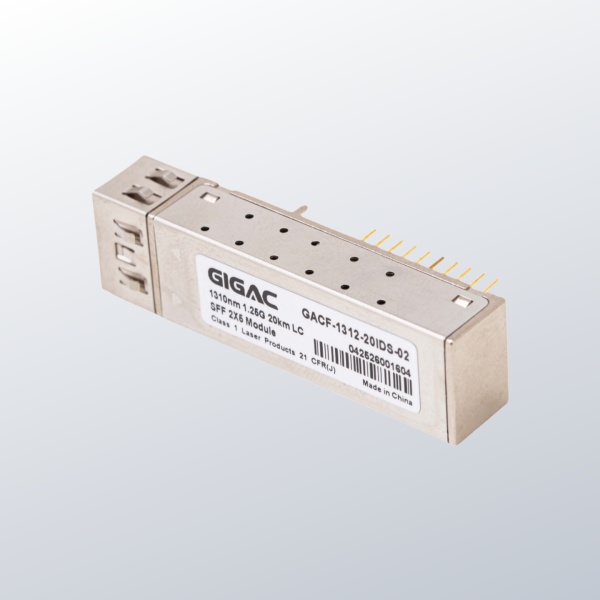
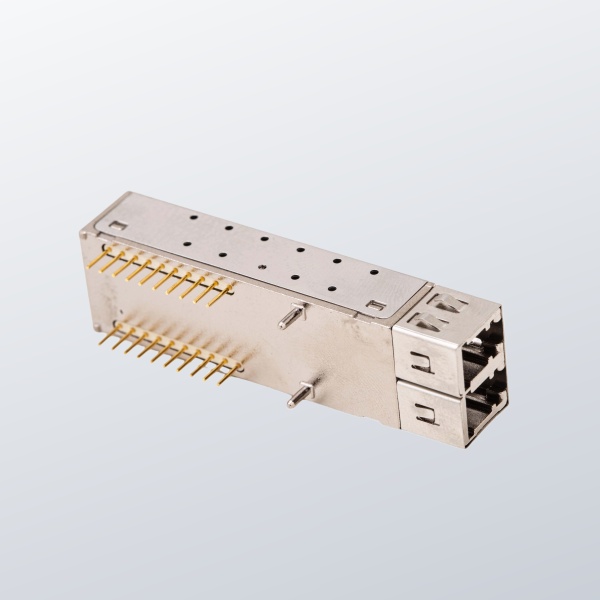
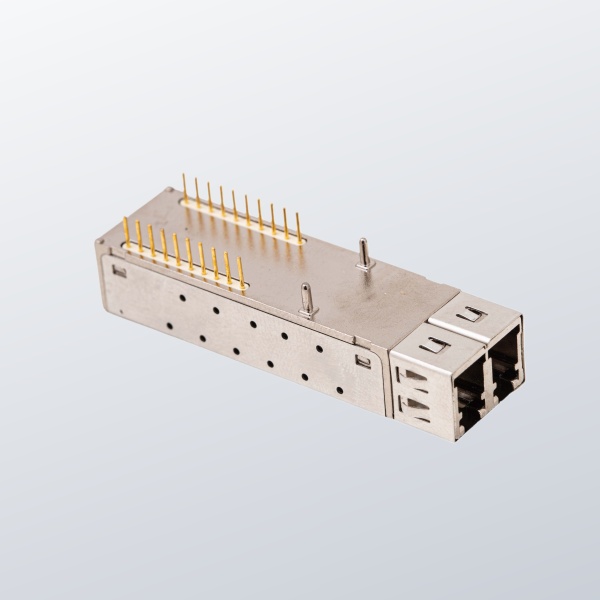
The GIGAC EML+TEC DWDM Optical Transceiver is a high-performance pluggable fiber optic module series integrating an EML (Electro-absorption Modulated Laser) transmitter, TEC (Thermo-Electric Cooler), optical receiving module, limiting amplifier, and microcontroller within a compact SFP or SFP+ form factor. It supports multiple wavelength grids including CWDM and DWDM, and is designed for long-haul and ultra-long-haul optical transmission applications.
The module's block diagram integrates four functional subsystems: the EML laser transmitter driven by a CDR (Clock and Data Recovery) IC; the TEC for precise laser temperature stabilization; a microcontroller managing automatic power control, bias control, and alarm functions; and the optical receiver chain comprising the receiving module and limiting amplifier for the returning signal path. This integration provides the full performance required for 40km access, 80km metro, 400km backbone, and 600km ultra-long-haul DWDM links.
Available in both single-fiber and dual-fiber configurations, with ROADM (Reconfigurable Optical Add-Drop Multiplexer) compatible variants for deployment in software-defined wavelength routing architectures. Industrial temperature grade (–40°C to +85°C) is available across the product series, supporting deployments in outdoor equipment rooms and industrial facilities.
DWDM 600km | 600km DWDM reach: The 100G coherent-compatible models achieve up to 600km over amplified DWDM infrastructure, enabling inter-city backbone fiber links and submarine cable aggregation applications without external transponders. |
Key Features
EML (Electro-absorption Modulated Laser) transmitter — low chirp, long-reach performance
Integrated TEC — precise laser temperature and wavelength stabilization
Internal microcontroller — APC, bias control, alarm, DDM management
Optical receiving module + limiting amplifier (LA)
Data rates: 2.5G (STM-16) | 10G (STM-64) | 40G | 100G
Wavelengths: CWDM | DWDM 50GHz / 100GHz ITU-T C-band grid
Transmission distance: 40km / 80km / 400km / 600km (model dependent)
Single-fiber (simplex) and dual-fiber (duplex) configurations
ROADM-compatible variants for wavelength-routed network deployment
Flexible digital output — multi-platform integration
DDM (Digital Diagnostic Monitoring) supported
Industrial temperature: –40°C to +85°C
Standards: SDH/SONET / 100GbE / 40GbE / DWDM / Coherent
Technical Advantages
EML Laser — Low Chirp for Long-Haul DWDM
An Electro-absorption Modulated Laser (EML) produces amplitude-modulated optical signals with significantly lower frequency chirp than directly modulated DFB lasers. Low chirp reduces chromatic dispersion penalties over long fiber spans, extending achievable transmission distance without dispersion compensation in DWDM metro and backbone links. This makes EML-based modules the standard transmitter technology for SDH STM-64/STM-256 and 100G Ethernet DWDM long-haul applications.
Integrated TEC — Wavelength Stability Across Temperature
The integrated TEC (Thermo-Electric Cooler) maintains the EML laser junction at a precise temperature setpoint regardless of ambient temperature variation. This ensures that the laser emission wavelength remains within the ITU-T DWDM channel grid tolerance (typically ±12.5GHz on a 50GHz grid) across the full –40°C to +85°C operating range — a critical requirement for DWDM systems where wavelength drift can cause channel crosstalk and system Q-factor degradation.
Microcontroller Integration — Automated Performance Management
The integrated microcontroller continuously manages APC (Automatic Power Control), bias current, TEC setpoint, and alarm generation without host-side intervention. This simplifies equipment design, reduces real-time software overhead in the host system, and provides standardized DDM parameter reporting via the 2-wire management interface for remote monitoring in network management systems (NMS).
600km Reach — Ultra-Long-Haul Without External Transponders
The 100G coherent-compatible models achieve up to 600km over amplified DWDM line systems — enabling inter-city backbone fiber links, core network optical bypass, and submarine cable aggregation within a pluggable SFP/SFP+ module format. This eliminates the need for external stand-alone transponder equipment in architectures where 600km reach can be achieved with sufficient OSNR.
ROADM-Compatible Variants — Software-Defined Wavelength Routing
ROADM (Reconfigurable Optical Add-Drop Multiplexer) compatible module variants enable wavelength assignment and routing to be controlled dynamically by the network management system without physical fiber reconnection. This supports software-defined networking (SDN) wavelength provisioning in modern carrier and cloud backbone networks where optical path reconfiguration must be performed remotely and rapidly.
! | Note: Long-haul DWDM deployment (especially 400km and 600km models) requires an amplified DWDM line system with appropriate EDFA gain configuration and OSNR budget. Reach specifications are provided for amplified line systems only. For channel-specific wavelength selection, specify the ITU-T C-band lane number at order time. ROADM variants require confirmation of the host system's ROADM interface protocol before ordering. |
DWDM Wavelength Grid Reference (Partial — C-Band 50GHz Grid)
Each module variant corresponds to a specific ITU-T C-band center frequency. Select lane number at order time.
Lane | Center Freq (THz) | Center Wavelength (nm) | Radius | Left Boundary | Right Boundary |
1 | 193.1 | 1552.52 | 50GHz | 193.075THz | 193.125THz |
2 | 193.0 | 1553.33 | 50GHz | 192.975THz | 193.025THz |
3 | 192.9 | 1554.13 | 50GHz | 192.875THz | 192.925THz |
4 | 192.8 | 1554.94 | 50GHz | 192.775THz | 192.825THz |
5 | 192.7 | 1555.75 | 50GHz | 192.675THz | 192.725THz |
6 | 192.6 | 1556.55 | 50GHz | 192.575THz | 192.625THz |
7 | 192.5 | 1557.36 | 50GHz | 192.475THz | 192.525THz |
8 | 192.4 | 1558.17 | 50GHz | 192.375THz | 192.425THz |
... | ... | ... | ... | ... | ... |
Full DWDM channel table from C-Band Lane 1 to 80+ available from our technical team. CWDM wavelength variants (1270nm–1610nm, 20nm spacing) also available in the series.
Typical Applications
SDH/SONET STM-16 / STM-64 / STM-256 long-haul optical line interfaces
100G Ethernet (100GbE) DWDM metro and backbone links
40G Ethernet (40GbE) long-haul DWDM transmission
ROADM-based wavelength-routed backbone network nodes
Inter-city backbone fiber DWDM links (400km–600km)
Coherent DWDM aggregation and submarine cable landing station equipment
Cloud provider backbone inter-data-center wavelength services
Carrier-grade DWDM access and metro ring nodes
Compatibility and Deployment
The EML+TEC DWDM transceiver series is available in SFP and SFP+ form factors, compatible with standard SFP/SFP+ host slots in routers, switches, and DWDM line cards. ROADM-compatible variants include the necessary management interface extensions for wavelength switching integration. DDM parameters are accessible via the standard 2-wire management interface.
For deployment: specify data rate, DWDM channel (C-Band lane number or CWDM wavelength), required distance, single or dual fiber, and temperature grade. ROADM variant availability and OSNR budget calculations are available from our technical team. Contact us for OEM volume support or custom configurations.
Our factory

Industrial Optical Module Assembly Line

High-Precision Fiber Assembly

Automated Manufacturing for Consistency
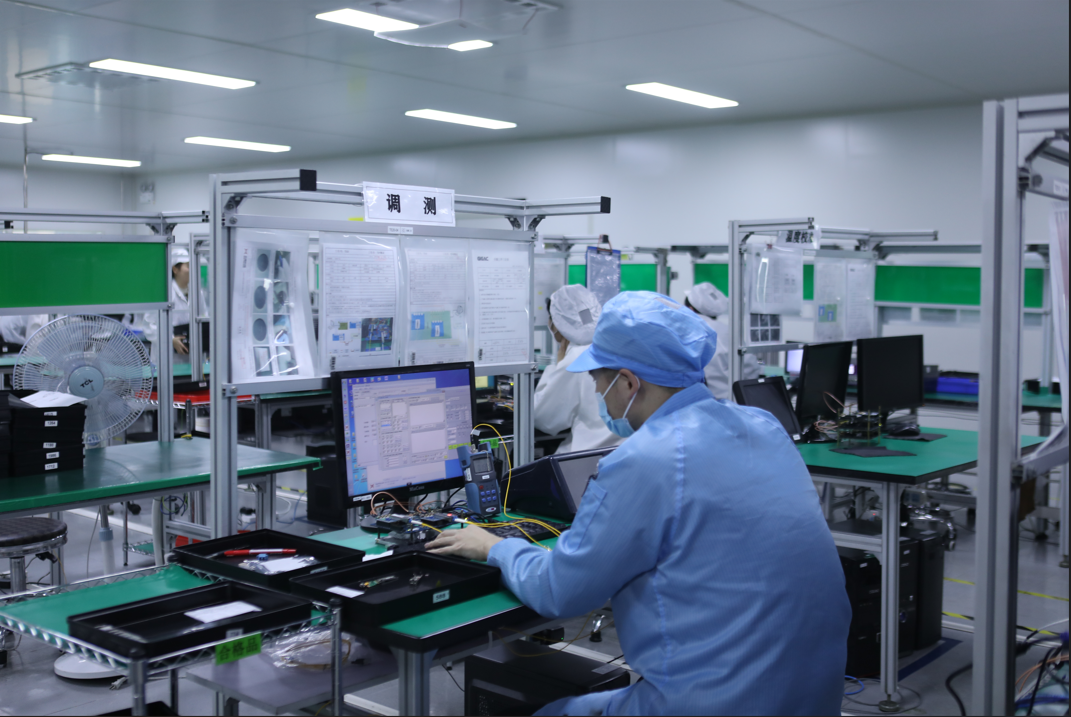
100% Functional & Reliability Testing